
Fireproof Safe Ratings Explained – What 30, 60 & 120 Minutes Actually Protect
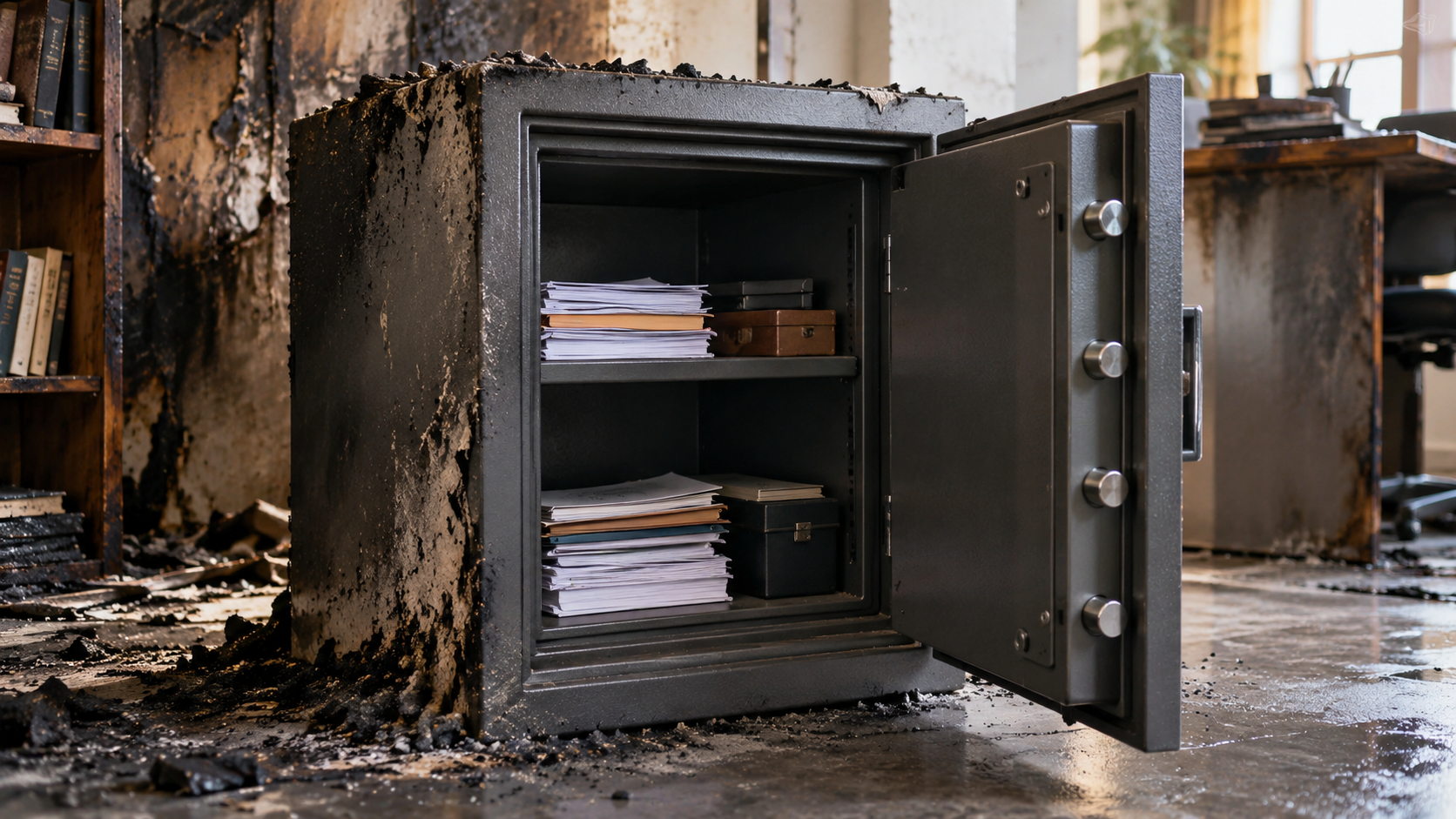
"Fireproof" is probably the most misused word in the safe market. Strictly speaking, no safe is fireproof.
Every genuine fire safe is fire-resistant. It protects a specific type of content, for a specific duration, against a specific temperature. If you understand these three variables, you can see through any brochure in under a minute.
This guide explains how fire ratings work, what really survives a fire, and how to choose the right rating for your home, office or business.
Why this matters more than people think
A house fire spreads fast. Within minutes, room temperatures commonly cross 600°C, and a fully developed fire can go well beyond 900°C.
Fire tenders in dense areas also face delays. Think of old Delhi lanes, Mumbai high-rises, Kolkata's Burrabazar or the old city markets of Hyderabad. Reaching the fire and putting it out can take a long time in such places.
What protects your property papers, cash and family photographs during that time is the fire rating of your safe.
What a fire rating actually measures
A proper fire test places the safe in a furnace that follows a standard time–temperature curve. The safe passes only if its internal temperature stays below a fixed limit for the full rated time.
| Time in furnace | Approx. furnace temperature (standard fire curve) |
|---|---|
| 30 minutes | ~842°C |
| 60 minutes | ~945°C |
| 90 minutes | ~1,006°C |
| 120 minutes | ~1,049°C |
So a "60-minute" rating means the contents stayed cool enough to survive after one hour in a furnace approaching 950°C. That is a serious test, and it is why genuine ratings come from laboratory certificates, not marketing claims.
Internationally recognised fire standards include EN 1047-1, EN 15659 and UL 72. Ask which standard a safe is tested to, and ask to see the test certificate.
What survives inside: the content-type thresholds
Different valuables fail at very different temperatures. This is the part most buyers miss.
| Content | Damage begins at about | Rating to look for |
|---|---|---|
| Paper: property deeds, FD certificates, wills, cash | Internal temperature above 177°C (paper chars above ~230°C) | Paper rating, e.g. UL 72 Class 350 or EN 1047-1 "P" classes |
| Magnetic media (old tapes) | 66°C | Class 150 |
| USB drives, hard disks, DVDs, photo negatives | 52°C with high humidity | Data rating, e.g. Class 125 or EN 1047-1 "DIS" classes |
| Gold jewellery | Gold melts at ~1,064°C | Usually survives, but stones, pearls and kundan or lac settings are damaged far earlier |
| Silver | Melts at ~962°C | Usually survives; tarnish and discolouration are likely |
One practical point stands out. A paper-rated safe that keeps documents perfectly safe can still destroy a pen drive or hard disk. If you store backups, you need a data-rated safe or a data cabinet inside it.
Not sure which fire rating your documents need? Our team will help you match the rating to what you store.
+91 91365 99447 / +91 94227 6650830 vs 60 vs 120 minutes: which do you need?
| Rating | Suitable for | Typical setting |
|---|---|---|
| 30 minutes | Basic protection for documents | Small offices and low-rise homes close to a fire station |
| 60 minutes | Most homes and offices | Apartments in Pune, Bengaluru, Hyderabad and Ahmedabad; corporate offices |
| 120 minutes | High-value or high-risk locations | Mumbai high-rises, old markets, commercial complexes, jewellery showrooms, banks |
Our honest advice: for most Indian homes, 60 minutes is the sensible minimum. Choose 120 minutes if you live in a high-rise, an older building or a crowded commercial area, or if the papers you store are irreplaceable.
For safes in high-rise buildings, there is one more interesting test. Some standards, such as UL 72, include an impact test. The heated safe is dropped from about 9 metres (30 feet) to simulate a floor giving way, and it must stay shut.
How fire protection is built into a safe
A genuine fire safe is engineered differently from a plain steel box.
Double-wall body: Two steel skins with fire-resistant composite insulation between them.
Intumescent door seals: Seals that expand with heat and close the door gap, stopping hot gases and smoke from getting in.
Stepped door edges: A profile that blocks a direct heat path into the safe.
Moisture-releasing insulation: Some designs release trapped moisture as steam when heated, which keeps the inside cool. This is why documents sometimes come out damp after a fire, but still readable.
Four common myths
"Heavy means fireproof." Weight mostly comes from steel, not insulation. A heavy safe can perform poorly in fire. Read why you should never buy a safe just because it is heavy.
"A burglary safe is automatically a fire safe." Not unless it has been tested for both. Many high-security safes are built only for burglary resistance.
"A fire rating lasts forever." After a real fire, the insulation is spent. The safe must be replaced.
"Pen drives are fine in a document safe." As the table above shows, data fails at much lower temperatures than paper.
Where fire risk comes from in Indian homes and offices
The most common triggers are familiar ones:
Electrical faults: Short circuits and overloaded wiring, especially with heavy AC use in summer.
Cooking and gas: Kitchen fires and LPG cylinder leaks.
Festivals: Diyas, candles and firecrackers during Diwali and the wedding season.
High-rise spread: Fire travelling through shafts and stairwells in tall buildings.
In humid cities like Mumbai, Chennai and Kolkata, there is one more point to keep in mind. Fire-safe insulation can draw moisture, so keep silica gel inside and store documents in sealed pouches.
A quick buyer's checklist
Ask for the test standard and certificate, not just a brochure claim.
Match the rating to the content: paper, data or jewellery.
Check the door seals and the build quality of the door edges.
Combine fire and burglary protection if you are storing jewellery or cash.
Install the safe away from the kitchen, anchored to a structural RCC floor.
Confirm after-sales service in your city.
Eshaan Enterprises' fire-resistant safes are tested to [standard and rating – client to confirm]. They are available in home, office and jewellery configurations.
Protect what cannot be replaced. Explore our fire-resistant safes and lockers for homes, offices and businesses.
+91 91365 99447 / +91 94227 66508Frequently asked questions
Is any safe really fireproof?
No. Safes are fire-resistant for a rated time and content type. A 60-minute paper rating, for example, keeps documents safe for 60 minutes in a standard test fire.
What fire rating is best for a home safe in India?
For most homes, 60 minutes is a sensible minimum. Choose 120 minutes for high-rises, older buildings or irreplaceable documents.
Can I keep pen drives and hard disks in a fire-resistant safe?
Only if the safe, or an insert inside it, is data-rated. Digital media fails at around 52°C, far below the limit for paper.
Will gold jewellery survive a house fire?
Gold melts at about 1,064°C, so the metal often survives. Stones, pearls and lac-based settings can be damaged much earlier.
Get the right fire rating the first time. Eshaan Enterprises manufactures fire and burglar resistant safes in Pune for homes, offices, jewellers and banks.
+91 91365 99447 / +91 94227 66508 Previous Post