
Biometric vs Digital vs Mechanical Locks – Which Safe Lock Is Hardest to Break?
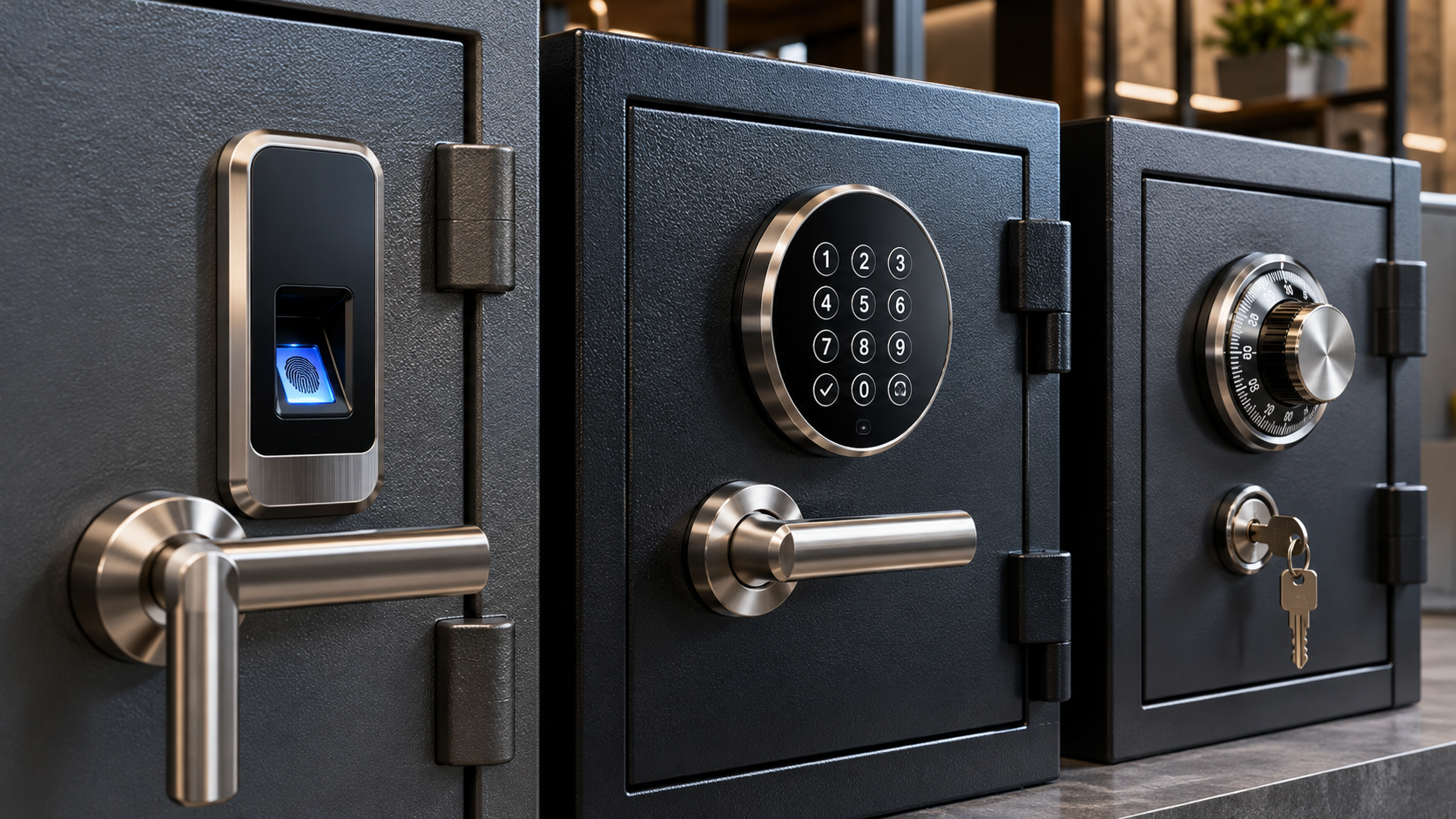
Here is a truth that surprises many buyers. Most burglars do not try to defeat the lock; they attack the body of the safe.
The lock still matters enormously, though. It decides how easily the right person gets in, and how easily the wrong person can. A key left under the mattress or a PIN set to your date of birth can undo even the strongest steel.
Let us compare the three main lock families honestly, and match each to the people who should use it.
The three lock families at a glance
| Lock type | How it opens | Strengths | Weak points | Best for |
|---|---|---|---|---|
| Mechanical key (lever lock) | Physical key, often dual keys | No battery; very long life; simple to use | Keys can be copied, misplaced or found; low-grade levers can be picked | Backup lock, bank lockers, low-maintenance use |
| Mechanical combination dial | Rotating dial with a number sequence | No electronics; high grades strongly resist manipulation | Slow to open; the combination must be remembered | Jewellers, banks, strong rooms |
| Digital keypad (electronic) | 4–8+ digit PIN | Fast; codes can be changed; multiple users; audit trail on some models | Needs batteries; worn keys can reveal the code; weak PINs | Homes, offices, hotels |
| Biometric (fingerprint) | Fingerprint, usually with PIN backup | Nothing to remember or lose; very quick access | Cuts, dry skin or worn ridges; cheap sensors can be fooled; needs batteries | Homes, personal safes, executive offices |
There is one very Indian detail worth knowing here. During the wedding season, mehendi on the fingertips can affect some fingerprint sensors. A good biometric safe should always have a PIN or key backup.
How secure is each lock, really?
The honest answer is that the grade of the lock matters more than its type. A certified electronic lock from a reputed lock maker can be far more secure than a cheap mechanical lock, and vice versa.
Ask which standard a lock is certified to:
| Standard | What it covers |
|---|---|
| EN 1300 (Class A to D) | European classification for high-security locks, with Class D the highest; tests code strength and manipulation resistance |
| UL 768 | US standard for combination locks, with Group 1 offering higher manipulation resistance than Group 2 |
| UL 2058 | US standard for high-security electronic locks |
Remember that a lock is only as strong as what sits behind it. Look for these three supporting features:
Hardplate: A hardened steel plate behind the lock that stops drilling.
Relocker: A device that permanently jams the bolts if someone drills or punches the lock.
Bolt work: Several solid live bolts, not one or two thin ones.
Want help choosing the right lock? Our experts will recommend the right lock for your family or business, not just the most expensive one.
+91 91365 99447 / +91 94227 66508Where locks actually fail in real life
Most lock failures are human, not technical. Here is what we see most often in the field, and how to avoid it:
- Battery dies. Good electronic safes have an external power terminal or an emergency override key. Replace the batteries once a year; Diwali cleaning is a good reminder.
- Default codes are never changed. Many safes, especially hotel safes, leave the factory with a default or master code. Change it on day one.
- Keypad wear gives the code away. Shiny or worn digits reveal which numbers you use. Use a longer PIN and change it now and then.
- Predictable PINs. 1234, birthdays, anniversaries and vehicle numbers are the first guesses any thief will try.
- Keys kept next to the safe. Hiding the key in the drawer beside the safe defeats the purpose of having one.
- Poor fingerprint enrolment. Enrol two or three fingers per user, from both hands.
- Humidity damage. In coastal cities such as Mumbai, Chennai and Kolkata, choose sealed keypads with corrosion-protected electronics.
- A useful feature to look for is wrong-code lockout. After a few wrong attempts, the lock disables itself for a set period, which makes guessing impractical.
Which lock should you choose?
| User or setting | Recommended lock | Why |
|---|---|---|
| Family flat in Pune, Bengaluru or Hyderabad | Biometric with PIN backup | Quick access for several family members |
| Senior citizens | Large-button digital keypad or mechanical key | Fingerprint ridges often fade with age, which lowers biometric accuracy |
| Hotels in Mumbai, Delhi, Jaipur or Goa | Digital keypad with guest-set code, master override and audit log | Handles high guest turnover with accountability |
| Corporate offices in Gurugram, BKC Mumbai or HITEC City Hyderabad | Multi-user digital lock with audit trail; dual control for cash | Records who opened the safe and when |
| Jewellery showrooms in Zaveri Bazaar, Chandni Chowk or T. Nagar | Dual control: high-security mechanical plus electronic, with time delay | No single person can open the safe |
| Banks and currency chests | Dual-custody mechanical locks with time locks | Follows established dual-custody practice |
For hotels in particular, the lock is part of the guest experience. A safe that guests find confusing will either go unused or keep calling the front desk. Choose a clear display and a simple guest-code process.
The case for dual locks and time delay
For jewellers, offices handling cash and any business with high-value stock, two features make a real difference.
- Dual control means the safe has two different locks, held by two different people. Neither can open it alone, which protects against both theft and insider risk.
- Time delay means the lock opens only after a set waiting period once the correct code is entered. This strongly deters armed robbery: a robber cannot force staff to open the safe immediately.
- Some commercial locks also offer time locks, which keep the safe shut outside business hours, even if someone has the correct code.
Quick decision guide
Who will open the safe, and how often? Frequent use by family favours biometric; rare use favours a key or keypad.
Is anyone elderly or with very dry skin?
Prefer a keypad or key, or ensure a reliable backup.
Is it a business?
Choose an audit trail and dual control.
Is the city humid?
Choose sealed electronics.
Always ask for the lock's certification and confirm there is an emergency access method.
Eshaan Enterprises supplies biometric, digital and mechanical lock options across our home, office, hotel and jewellery safes, along with [lock brands and certifications – client to confirm].
Get a safe with the right lock for your people. Browse our biometric and electronic safe lockers, or ask us for a recommendation.
+91 91365 99447 / +91 94227 66508Frequently asked questions
Is a biometric safe locker secure?
Yes, if it uses a quality sensor, a certified lock and a strong safe body. Always choose a model with a PIN or key backup.
Can a fingerprint locker be hacked? Low-cost sensors can sometimes be fooled. Reputed, certified biometric locks with anti-spoofing technology are far harder to defeat.
What happens if the battery of my digital safe dies? Most good safes offer an external power terminal or a mechanical override key, so you can still open it. Change the batteries yearly.
Which lock is best for a home safe in India?
For most families, a biometric lock with PIN backup offers the best balance. Senior citizens may prefer a keypad or key.
One lock, the right lock. Eshaan Enterprises manufactures biometric, digital and mechanical safe lockers in Pune for homes, offices, hotels and jewellers.
 Previous Post