
Bank Locker vs Home Safe in 2026 – Charges, Waiting Lists & RBI Liability Compared
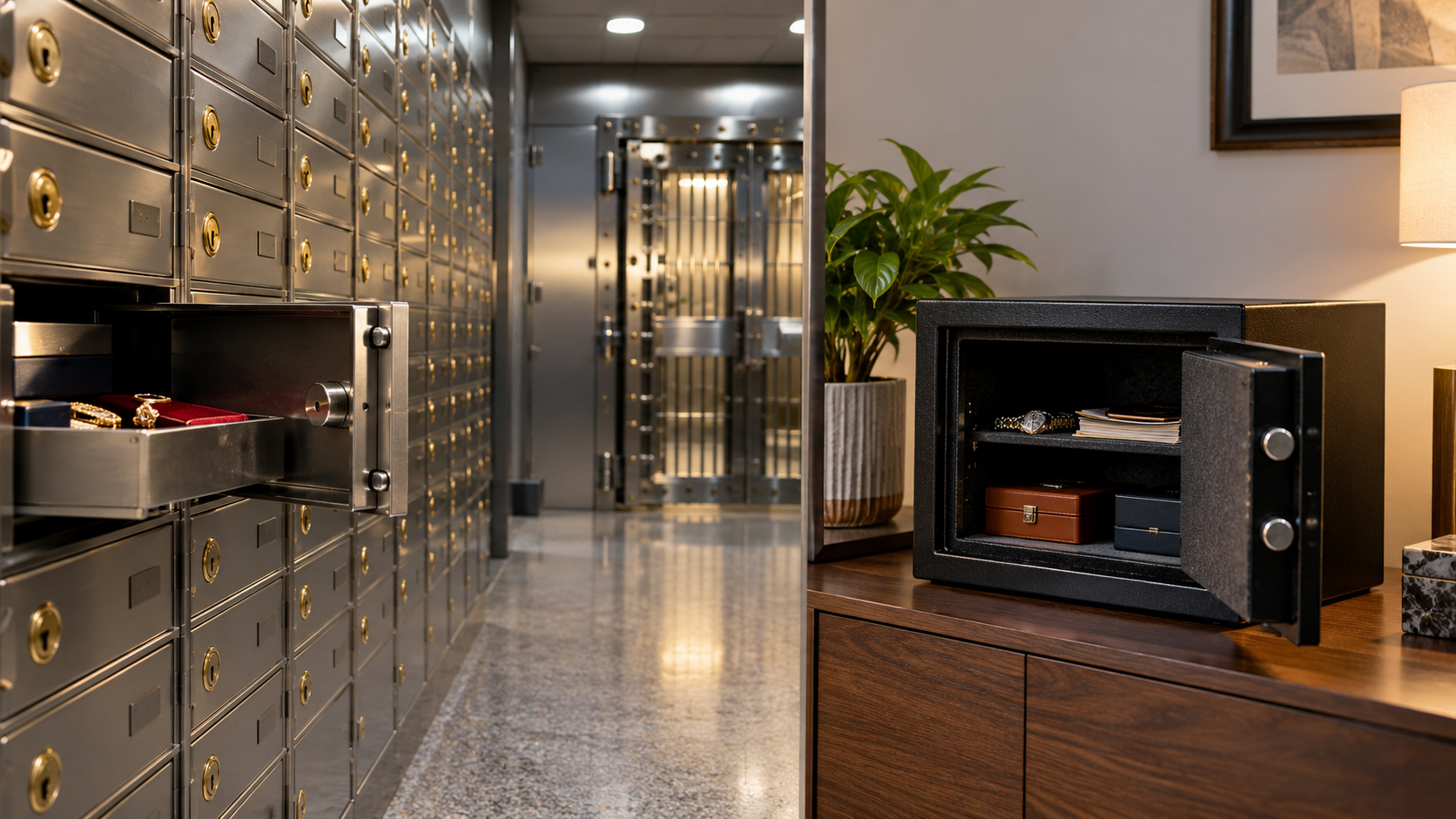
For decades, Indian families followed one simple rule: valuables go to the bank. In 2026, that rule deserves a fresh look.
Gold is near ₹1.5 lakh per 10 grams, so families now hold far more value than before. Busy branches in Mumbai, Bengaluru and Delhi NCR often have waiting lists for lockers. And RBI's revised locker rules have made it very clear how much a bank owes you if something goes wrong. In many cases, it is less than people assume.
Here is an honest, numbers-first comparison to help you decide.
What RBI's locker rules actually say
RBI's revised safe deposit locker guidelines came into force on 1 January 2022. The key points every locker holder should know are these:
Liability is capped. For loss due to fire, theft, burglary, dacoity, building collapse or fraud by bank staff, the bank's liability is up to 100 times the annual locker rent.
There is no liability for natural calamities. Earthquakes, floods, lightning and other acts of God are excluded. Loss caused by the customer's own negligence is also excluded.
The bank does not insure your contents. It does not know what is inside your locker, and it does not cover the contents.
A term deposit can be required. Banks may ask for a fixed deposit covering three years' rent plus the charges for breaking open the locker.
Access is tracked. Banks must send an SMS or email alert every time your locker is operated.
This is general information, not legal advice. Please read your bank's locker agreement carefully.
What does "100 times the rent" really cover?
This is the most important calculation in this article. Most locker holders have never done it.
| Locker size | Indicative annual rent (metro branch) | Maximum bank liability (100x rent) | Gold that amount covers at ₹1.5 lakh per 10 g |
|---|---|---|---|
| Small | ₹2,000–₹4,000 | ₹2–4 lakh | about 13–27 g |
| Medium | ₹4,000–₹8,000 | ₹4–8 lakh | about 27–53 g |
| Large | ₹8,000–₹15,000 | ₹8–15 lakh | about 53–100 g |
Rents are indicative and exclude 18% GST. Actual rates vary by bank, branch and city.
Think about what that means in practice. Suppose a family in Chennai keeps 300 g of jewellery, worth about ₹45 lakh, in a medium locker. Even if the loss is fully the bank's fault, the maximum compensation is about ₹4–8 lakh.
In other words, a bank locker is a strong room, not an insurance policy.
Bank locker vs home safe: head-to-head
| Factor | Bank locker | Home safe locker |
|---|---|---|
| Availability | Waiting lists at many metro branches; often linked to an account or FD | Delivered and installed in 24 hrs |
| Recurring cost | Annual rent + 18% GST, revised from time to time | One-time purchase, no rent |
| Access | Banking hours and working days only | 24x7, including festivals, weddings and holidays |
| Liability for loss | Capped at 100x rent; nil for natural calamities | Your own; can be covered by home insurance |
| Burglary protection | Strong room, guards and CCTV | Depends on safe grade, anchoring and home security |
| Fire protection | Bank strong room | Depends on the safe's fire rating |
| Privacy | Each visit is logged at the branch | Completely private |
| Best suited for | Rarely used heirlooms and original property papers | Jewellery worn regularly, cash and daily documents |
Access matters more than people expect, especially in the Indian wedding season from November to February. Families take jewellery out and return it several times. Each trip means a branch visit, in branch hours, through Mumbai or Bengaluru traffic. Diwali-week bank holidays add to the problem.
Tired of locker waiting lists and branch visits? Get a certified home safe that gives you 24x7 access.
+91 91365 99447 / +91 94227 66508The 10-year cost comparison
Over ten years, the money adds up quietly.
| Cost item over 10 years | Bank locker (medium) | Home safe locker |
|---|---|---|
| Rent or purchase | About ₹70,800 (₹6,000 + 18% GST per year, no revisions assumed) | Starts from ₹5000 |
| Money locked in FD | About ₹18,000 (three years' rent) | None |
| Branch visits | Several each year, in working hours | None |
| Maintenance | None | Periodic service, ₹5000 |
In reality, locker rents are revised periodically, so the bank figure is a conservative estimate. A good home safe, by contrast, is built to last for decades.
When a bank locker is still the better choice
To be fair, a bank locker remains the right answer in some situations:
- Rarely used heirlooms: Pieces you take out once in five years.
- Original property documents: Papers you seldom need to access.
- Frequent long absences: Homes left locked for months, for example by NRI families or people on long postings.
- Rented homes: Places where the landlord will not allow a safe to be anchored to the floor or wall.
The smart split most metro families now use
The best answer for many families is to use both.
Take a typical Bengaluru or Pune family. Ancestral jewellery and original property deeds stay in the bank locker. Everyday jewellery, cash, passports, FD certificates and insurance papers go in a fire-resistant home locker.
This split keeps the high-value, rarely used items off-site. Meanwhile, everything needed regularly stays protected and within reach.
Switching to a home safe? Check these five things
Burglary resistance: Look for a hardplate, anti-drill protection, relockers and a solid bolt mechanism.
Fire rating: Match the rating to what you will store. Our guide to fireproof safe ratings explains 30, 60 and 120 minutes.
Lock type: Choose between biometric, digital and mechanical locks based on who will use the safe.
Anchoring: The safe must be bolted to RCC. An unanchored safe is only a heavy box.
Local service: Confirm installation and after-sales support in your city, whether Mumbai, Hyderabad, Kolkata, Ahmedabad or elsewhere.
Eshaan Enterprises also manufactures bank safe lockers and strong room doors for banks and financial institutions. We understand both sides of this decision.
Need help choosing the right home locker?
+91 91365 99447 / +91 94227 66508Frequently asked questions
Are bank locker contents insured by the bank?
No. The bank does not insure your locker contents. Its liability is capped at 100 times the annual rent, and only for specified events.
Will the bank pay if my locker is damaged in a flood or earthquake?
Under RBI rules, banks are not liable for loss from natural calamities or acts of God. They are still expected to take reasonable care of their premises.
How much are bank locker charges in metro cities?
They vary by bank, branch and size. Indicatively, they range from about ₹2,000 to ₹15,000 a year plus GST. Always check your bank's current rate card.
Is a home safe a good alternative to a bank locker?
For items you use regularly, yes, provided the safe is certified, fire-rated and properly anchored. Many families use both.
Bring your valuables home, safely. Eshaan Enterprises builds fire and burglar resistant home lockers at our Pune factory.
+91 91365 99447 / +91 94227 66508 Previous Post